MECHANISM OF ACTION
KP104 Targets Multiple Pathways
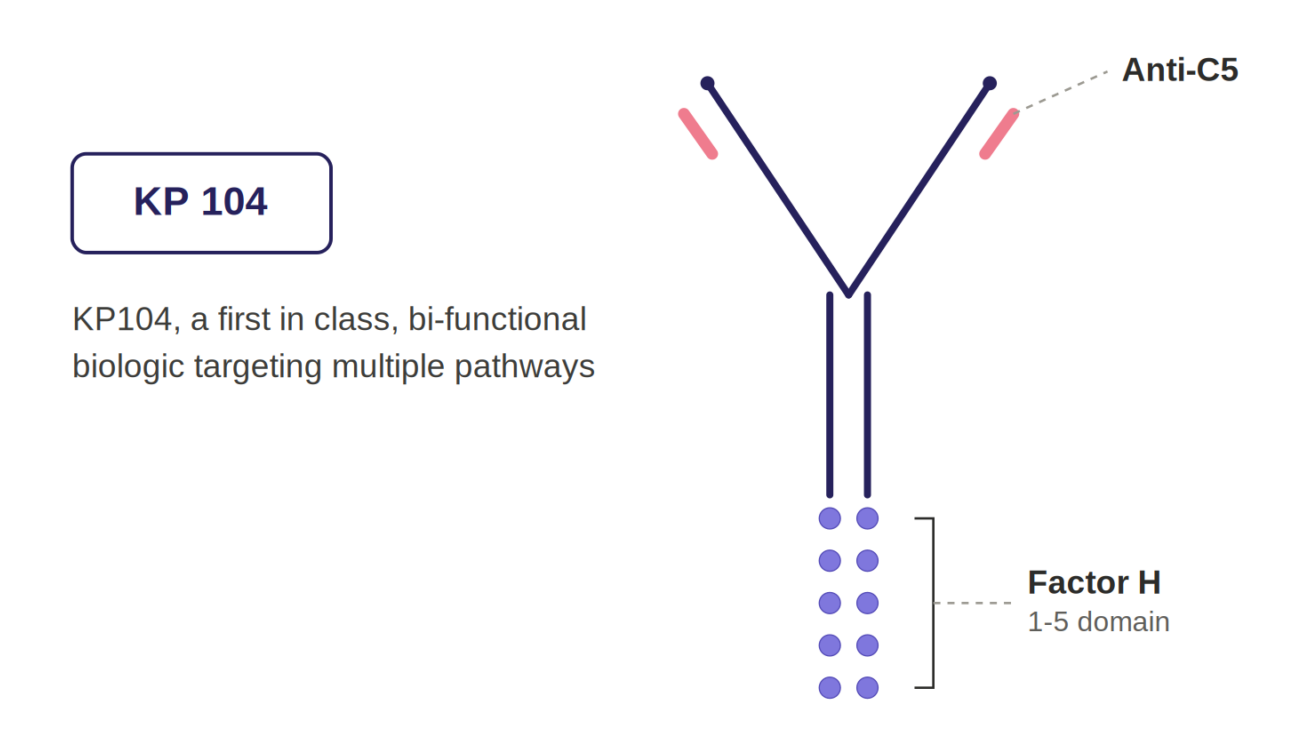
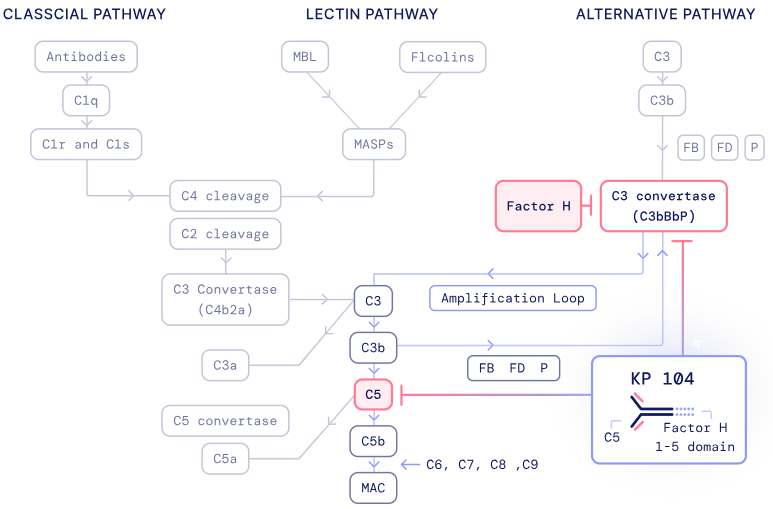
KP104 is the only drug to simultaneously block the upstream Alternative Pathway (Factor H) and downstream Terminal Pathway (C5). With this novel dual-approach mechanism of action, KP104 is uniquely positioned to target complement-mediated diseases where single-target C5 or C3 inhibitors alone are inadequate.
Recently, evidence has emerged to suggest that for certain indications, such as PNH, simultaneous blockade of both proximal and terminal complement pathways may be needed. Click here to read the NEJM paper.
In the case of PNH, C5 inhibition treats intravascular hemolysis (IVH), but the alternative pathway is unchecked and can cause extravascular hemolysis (EVH) and no amount of C5 inhibition will treat EVH. Thus, PNH patients treated with only a C5 inhibitor require ongoing transfusions and have reduced quality-of-life. On the other hand, proximal complement inhibitors can stop EVH and this will lead to accumulation of PNH clones, in some cases up to 95-99%. See Blood Paper. The latter outcome, when coupled to a pharmacokinetic breakthrough of the proximal inhibitor, may produce more severe and life-threatening intravascular hemolysis. See the NEJM paper. A potential solution to this clinical challenge in PNH management may be combinatorial usage of proximal and terminal complement inhibitors, but cost and patient compliance could be a major hurdle for such an approach. Involvement of multiple pathways of complement activation may not be restricted to PNH and it is likely that other complex complement-mediated diseases could have similar pathogenic mechanisms. As the first and only bifunctional complement inhibitor, KP104 is uniquely suited to address the inadequacy of single pathway complement inhibitors, both in efficacy and patient compliance.